


Adopt, Don’t Shop? Why It’s Not Quite That Simple
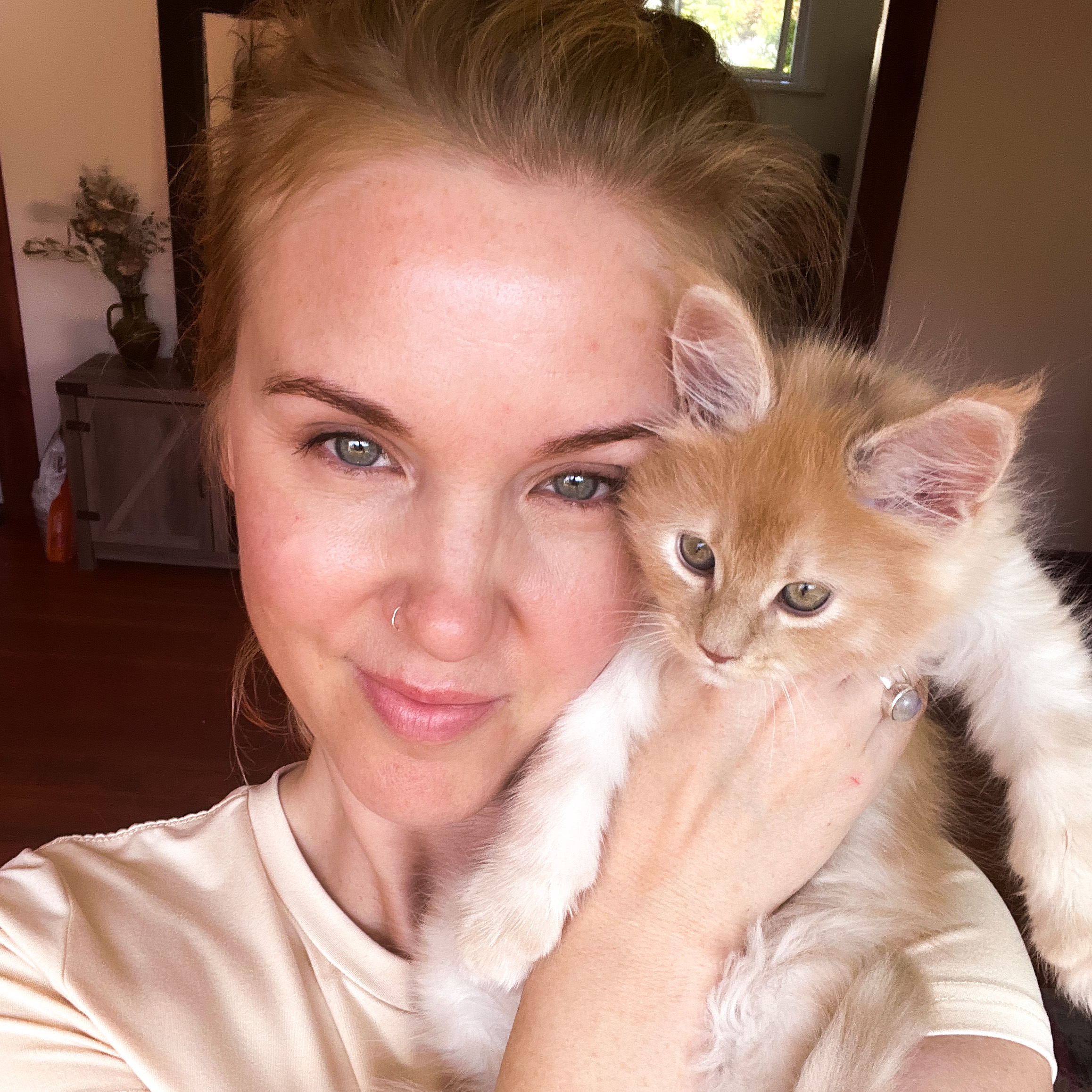
If you're a breeder—or even someone who has purchased a pedigreed cat—you've probably heard it:
“Adopt, don't shop.”
I understand where the phrase comes from.
There are cats in shelters that need homes. There are irresponsible breeders. There are accidental litters, backyard breeders, kitten mills and people producing animals with very little thought about what happens to them after they're sold.
Those are real animal-welfare problems.
I support rescue. In fact, there are times when I actively recommend that someone adopt rather than purchase a Maine Coon from me.
But I don't believe supporting rescue requires being against responsible breeding.
And I think this conversation deserves considerably more nuance than three words in an Instagram comment.

First, Let's Admit Something: Most of Us “Shop”
I don't mean that in a negative way.
When people choose a cat—even when they're adopting—they generally have preferences.
They may want a kitten rather than an adult. They may prefer a male or female. They may want long hair or short hair. They may need a cat that's good with children, dogs or other cats. They may want an outgoing cat rather than a shy one.
They may scroll through dozens of rescue profiles before one particular cat catches their attention.
And that's okay.
In fact, I think people should be selective.
The goal shouldn't be to put any available cat into any available home. The goal should be to create a successful match that lasts for the rest of that animal's life.
Rescues recognize this themselves. That's why adoption profiles tell you whether a cat needs a quiet home, can live with other animals, enjoys children, needs to be adopted with a companion or would prefer to be the only cat.
So when someone tells me that adopting is fundamentally different because you aren't “shopping,” I don't entirely agree.
You are still choosing.
And choosing isn't the problem.
The more important question is whether you're choosing responsibly.
Sometimes I Tell People NOT to Buy a Maine Coon
This may surprise people.
Occasionally someone applies for one of my kittens and essentially tells me:
“I don't really care if it's a purebred Maine Coon.”
My response is generally that they probably don't need to purchase one.
If what you really want is a wonderful family cat and documented pedigree and breed aren't important to you, there are amazing cats available through legitimate rescues.
I'd much rather see someone adopt one of those cats than buy a cheap “Maine Coon” from an irresponsible breeder simply because it has ear tufts and a fluffy tail.
Supporting ethical breeding doesn't mean believing everyone needs a purebred animal.
So Why Would Someone Buy a Maine Coon?
Because some people specifically want a Maine Coon.
Not simply a fluffy cat.
Not a domestic longhair that resembles one.
Not a cat labelled “Maine Coon mix.”
A pedigreed Maine Coon.
Someone may have researched the breed for years. They may want documented ancestry, known parentage, intentional pairings, breed characteristics and generations of health information. They may want to know how their kitten was raised and socialized and what health testing was performed on its parents.
They may also want a relationship with a breeder who remains available throughout that cat's life.
No responsible breeder should promise exactly what a kitten will become. Genetics aren't that simple, and cats aren't manufactured products.
But responsible breeding gives us considerably more information with which to make educated decisions.
And importantly, not every breeder offering “purebred Maine Coons” is breeding responsibly. If you're considering purchasing a kitten, I've written a separate guide on How to Find a Reputable Maine Coon Breeder in Canada, including what I believe prospective owners should look for before committing to a breeder.

Let's Be Honest: Pedigreed Cats Are a Luxury
There's another reality that sometimes gets ignored in the “adopt, don't shop” conversation:
Most people are not going to spend thousands of dollars on a pedigreed cat.
And that's okay.
A responsibly bred pedigreed Maine Coon is expensive.
There are years of work behind a good breeding program: purchasing quality breeding cats, genetic and breed-specific health testing, veterinary care, registration, quality nutrition, equipment, raising litters, emergency care when things go wrong and countless other expenses that most kitten buyers will never see.
A pedigreed cat is, quite simply, a luxury purchase.
Nobody needs a Maine Coon.
People choose one because they love the breed and because having a particular breed, documented pedigree and the work behind a responsible breeding program is worth the additional expense to them.
I've actually broken down this subject much further in How Much Does a Maine Coon Kitten Cost in Canada?, including why prices vary so dramatically between breeders and what may—or may not—be included in that price.
And realistically, the average person looking for a family cat is probably not my customer.
That's important.
The person prepared to invest thousands of dollars specifically to own a pedigreed Maine Coon isn't necessarily the same person deciding between several adoption candidates at their local shelter.
There is certainly overlap. Some people who can afford a pedigreed cat choose rescue, and plenty of people who purchase pedigreed animals also have rescue animals.
But these aren't two perfectly interchangeable markets where every pedigreed kitten sold represents one shelter adoption that would otherwise have occurred.
That assumption is far too simplistic.
For many people, a rescue or shelter is exactly where they should look for their next cat. There are wonderful animals available, and if pedigree isn't important to you, I will happily encourage you to consider adoption.
For someone else, owning a pedigreed Maine Coon may be something they've researched, saved for and waited years to do.
Neither person needs to justify their choice to the other.
And calling pedigreed cats a luxury isn't an insult to shelter cats.
Price doesn't determine an animal's worth.
A rescue cat isn't worth less than a $3,000 pedigreed cat any more than a free barn kitten is worth less as a living creature.
The price reflects what went into responsibly producing and acquiring that particular animal—not the value of its life.
“But There Are Maine Coons in Shelters”
Sometimes there are.
But we need to clarify something here.
A long-haired cat isn't a Maine Coon because it looks like one.
Big paws don't make a Maine Coon.
Lynx tips don't make a Maine Coon.
A fluffy tail doesn't make a Maine Coon.
And weighing 18 pounds certainly doesn't make a Maine Coon.
Maine Coons are a pedigreed breed with documented ancestry and history.
Shelters understandably sometimes use breed descriptions based on appearance when a cat's ancestry is unknown. But a cat being labelled “Maine Coon” or “Maine Coon mix” doesn't establish that it actually has Maine Coon ancestry.
Domestic long-haired cats can be absolutely spectacular cats. They don't need a breed label to make them more valuable.
But if someone specifically wants a pedigreed Maine Coon, those aren't necessarily interchangeable choices.
“Every Kitten Purchased Means One Shelter Cat Lost a Home!"
This is probably the argument I hear most often.
The reasoning is that if someone purchases a kitten from a breeder, that's one person who could have adopted a shelter cat instead. Therefore, purchasing a pedigreed kitten has effectively cost a shelter cat its home.
I understand the logic.
But it relies on one enormous assumption:
That the person would otherwise have adopted a shelter cat.
We don't know that.
Someone who has spent two years researching Maine Coons and specifically wants one may not be deciding between Maine Coon kitten and shelter cat.
Their decision may actually be between Maine Coon kitten now, Maine Coon kitten later, another pedigreed breed or no cat at all.
Some people who purchase pedigreed cats absolutely would consider adoption instead.
Others wouldn't.
And that's okay.
A shelter cat deserves a family that genuinely wants that individual animal—not to be someone's second choice because that person was shamed out of getting the animal they actually wanted.
There is also a broader issue here. Research involving BC shelter data shows that animal relinquishment is connected to complicated human circumstances, including housing issues, inability to afford an animal, health and personal circumstances, and broader measures of social vulnerability. Shelter populations aren't created by one simple behaviour with one simple solution.
So while encouraging adoption can absolutely help individual shelter cats find homes, blaming responsible breeders doesn't address all the reasons cats enter the shelter system in the first place.
In my perfect world, there wouldn't be any cats in shelters.
And there wouldn't be endless advertisements for free kittens either.
Not because I don't support shelters.
I absolutely do.
I'm grateful they exist because we currently live in a world where cats are abandoned, surrendered, born accidentally and found without anyone willing or able to take responsibility for them.
But a shelter is a solution to a problem.
My ideal world would be one where we prevented as much of that problem as possible.
Here's My Actually Unpopular Opinion
Imagine if essentially every kitten brought into this world was intentional.
The parents were appropriately health tested.
The pairing was planned.
The kittens received proper veterinary care, nutrition, handling and socialization.
Potential owners were screened.
People financially planned before bringing their kitten home.
Cats not intended for responsible breeding were spayed or neutered.
And most importantly, there was someone standing behind every kitten who remained accountable for that animal throughout its lifetime.
In that world, we wouldn't need nearly as many rescues.
That, to me, should ultimately be the goal.
And Yes, I Think There Is Value in Paying for an Animal
This part may be controversial too.
I think there can be value in having to financially plan before acquiring an animal.
That does not mean that someone who adopts a cat is financially irresponsible.
It doesn't mean wealthy people automatically make better pet owners.
And paying thousands of dollars for a pedigreed kitten certainly doesn't guarantee that someone will provide excellent care.
Money alone doesn't make someone responsible.
But cats cost money.
Good food costs money.
Vaccinations cost money.
Spaying and neutering cost money.
Routine veterinary care costs money.
Dental care costs money.
And an emergency veterinary bill can cost thousands of dollars without warning.
So while I understand why free kittens exist, I don't think an endless supply of animals being handed out for nothing should be considered an ideal animal-welfare model.
Acquiring the cat is the inexpensive part.
Caring for it for the next 15 or 20 years is the real commitment.
A “Free Kitten” Isn't Free
That free kitten someone picked up from a farm may still need an examination, vaccines, deworming, parasite treatment, spaying or neutering and potentially testing or treatment for existing health problems.
None of this means there's anything wrong with that kitten.
Some absolutely incredible cats started life as free barn kittens.
But “free” describes the acquisition price. It doesn't describe responsible cat ownership.
And when free kittens are the result of intact cats continually reproducing without anyone taking responsibility for preventing the next litter, that's something I believe we should be trying to prevent.
Ethical Breeding Is Not the Same as Breeding
This is probably the most important distinction in this entire article.
I don't believe people should simply “shop.”
I believe that if someone chooses to purchase a kitten, they should shop responsibly.
There are irresponsible breeders.
There are people breeding cats without appropriate health testing.
There are people producing kittens because they can make money from them without carefully considering genetics, temperament, structure or health.
There are breeders who sell kittens to practically anyone willing to pay.
And there are kitten mills.
I don't support any of those things.

What Is a Backyard Breeder?
“Backyard breeder” has become one of those phrases people throw around online whenever they don't like another breeder.
That's not particularly helpful.
A backyard breeder isn't defined by whether they literally breed cats in their home.
Many excellent breeders raise kittens inside their homes.
What matters is how someone breeds.
Warning signs of irresponsible breeding can include inadequate breed-appropriate health testing, repeatedly breeding without a thoughtful program, inadequate veterinary care, poor living conditions, selling kittens too young, failing to properly socialize kittens, little or no screening of prospective homes, breeding animals with serious known hereditary problems and taking little responsibility for kittens after they're sold.
Ethical breeding isn't determined by the size of someone's house, how fancy their website is or how many followers they have.
It's demonstrated through their practices.
What Does “Health Tested” Actually Mean?
Health testing deserves its own mention because it's one of the phrases used constantly in the breeding world without much explanation.
A DNA test alone doesn't necessarily constitute a complete health-testing program.
Different breeds have different known health concerns, and responsible breeders should understand the conditions relevant to the animals they're breeding and make informed breeding decisions based on those results.
With Maine Coons, that conversation can include genetic testing as well as screening for conditions such as hip dysplasia and hypertrophic cardiomyopathy (HCM).
I've gone into this in considerably more detail in Maine Coon Health Testing: What Should Responsible Breeders Test For?
If you're considering purchasing a pedigreed Maine Coon, don't be afraid to ask a breeder exactly what they test for—and to ask to see the results.
“Health tested” shouldn't just be a marketing phrase.
What Is a Kitten Mill?
This term gets misused too.
Having several cats doesn't automatically make someone a kitten mill.
Having multiple litters doesn't automatically make someone a kitten mill.
Having a professional breeding program doesn't make someone a kitten mill.
A kitten mill is generally characterized as a high-volume, substandard breeding operation where producing animals and maximizing profit take priority over their health and welfare.
Common characteristics include overcrowding, inadequate veterinary care, poor sanitation, insufficient socialization and breeding practices that prioritize production over the wellbeing of breeding cats and kittens.
That's very different from simply saying, “That breeder produces more kittens than I personally think they should.”
The appropriate questions are about welfare.
How are the cats living?
Are they healthy?
Do they receive veterinary care?
Are appropriate health tests being performed?
Are kittens socialized?
Are breeding cats treated as valued animals rather than production machines?
Does the breeder maintain records?
Do they know their cats individually?
What happens when their breeding cats retire?
And what responsibility does that breeder take for the kittens they produce?
Those questions tell us considerably more than simply counting litters.

Responsibility Shouldn't End When the Kitten Leaves
This is one of my core beliefs as a breeder.
My responsibility for a Maine Coon Mayo kitten doesn't end when someone pays me and drives away.
My kittens leave with a contract, veterinary records and ongoing breeder support.
Pet kittens are also enrolled with SpaySecure, an independent third party that tracks compliance with my contractual spay/neuter requirements.
Spaying or neutering a pet kitten isn't merely something I recommend.
It's part of the contract.
If an owner doesn't comply with that agreement, SpaySecure can pursue contractual enforcement on my behalf, including legal enforcement when necessary.
I take that seriously because I intentionally brought that kitten into the world.
I don't want cats I've produced becoming part of uncontrolled breeding.
And if circumstances ever change and one of my families can no longer care for their cat, I want to know.
I believe ethical breeders should remain a safety net for the animals they intentionally produce.
You can read more about what is included with a Maine Coon Mayo kitten, our health guarantee, health testing, Priority List and placement policies in our FAQ.
What Actually Helps Shelter Cats?
This is where I wish more of the conversation went.
Instead of arguing endlessly about “adopt versus shop,” let's talk about why animals become homeless in the first place.
BC research involving tens of thousands of shelter animals has demonstrated relationships between animal surrender and human social circumstances, including housing, finances, health and residential instability.
Another BC study examining more than 21,000 animals found differences between the communities animals were surrendered from and those into which they were later adopted.
Those findings point toward something much bigger than breeders versus rescues.
Keeping animals out of shelters can involve access to veterinary care, pet-friendly housing, support for owners experiencing hardship, responsible spaying and neutering, preventing uncontrolled reproduction, appropriate matching between animals and homes, and people thinking carefully before acquiring an animal.
Responsible breeders have a role in that too.
We should be screening homes.
We should be health testing.
We should be controlling where our breeding lines go.
We should be preventing pet kittens from reproducing indiscriminately.
And we should be willing to help if one of our animals needs another home.
Before You Adopt—or Shop
If this article leaves you considering a pedigreed Maine Coon, my advice isn't simply to go buy one.
Do your homework.
Start with How to Find a Reputable Maine Coon Breeder in Canada to understand what separates responsible breeding from simply producing kittens.
Read Maine Coon Health Testing: What Should Responsible Breeders Test For? so you understand what questions to ask and why those tests matter.
And if you're wondering why responsibly bred Maine Coons can cost thousands of dollars, read How Much Does a Maine Coon Kitten Cost in Canada?
If you read all of that and decide a pedigreed Maine Coon isn't important enough to you to justify the expense?
That's completely okay.
Go meet some rescue cats.
You might find exactly who you're looking for.
But if you've done the research and decide that you specifically want a pedigreed Maine Coon from a responsible breeder?
That's okay too.
The real divide shouldn't be:
Adopt vs. shop.
It should be:
Responsible vs. irresponsible.
Rescue deals with the reality we have today.
Ethical breeding, responsible ownership, spaying and neutering, education and support should all be working toward a future where fewer cats ever need rescuing in the first place.
So perhaps my version isn't “adopt, don't shop.”
It's much simpler:
Adopt responsibly. Shop responsibly. And whichever cat you choose, be responsible for them for life.

💯% agree! Excellent article!